Stress does not stop at the office door.
Workloads, financial worries and personal challenges can affect concentration, communication and the way people cope. Employees benefit from practical ways to recognise and respond to pressure.
Human-centred awareness sessions that help employees understand stress, healthy coping and substance-use risk without stigma.
Discuss a workplace programme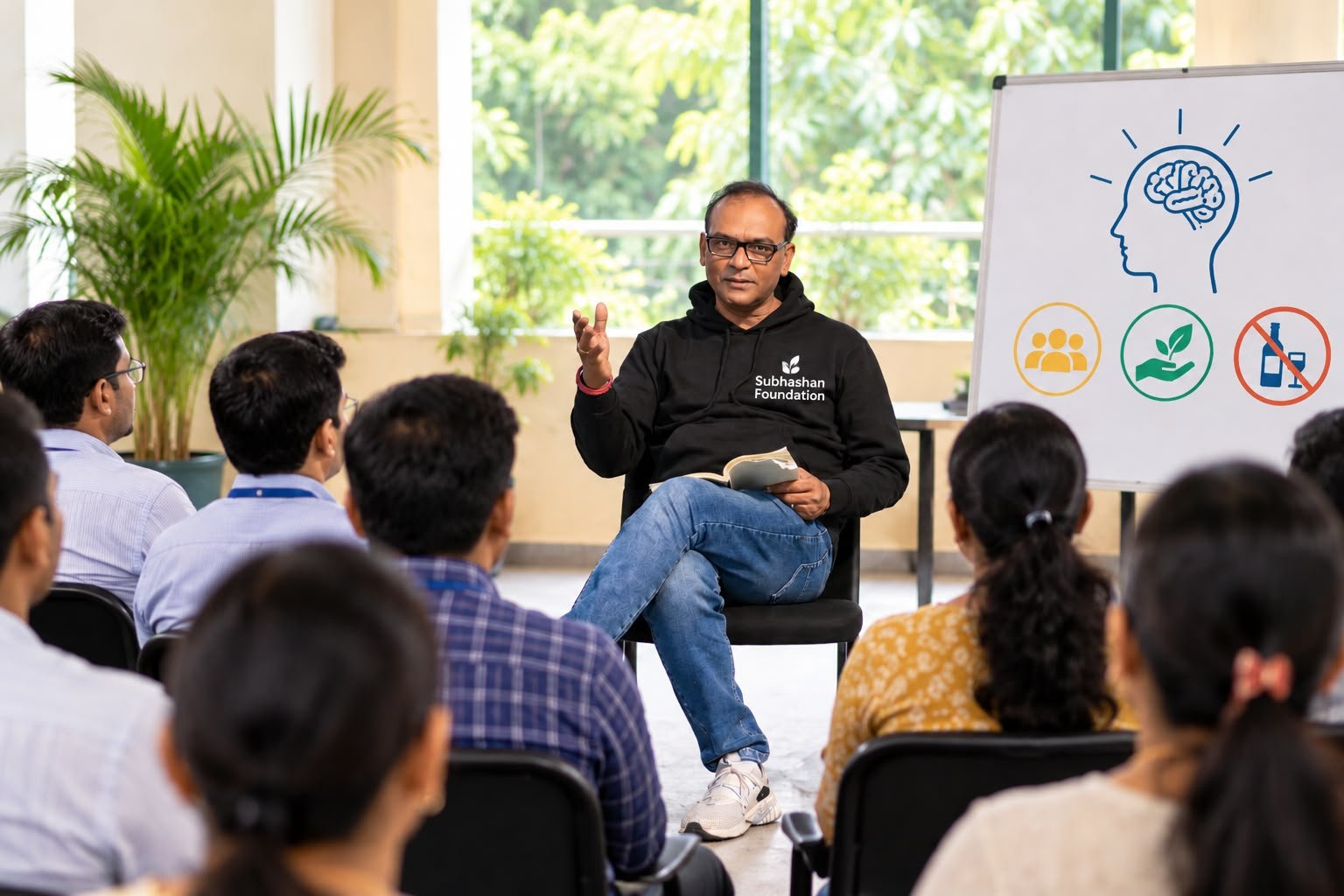
Awareness makes it easier for employees to talk about stress, recognise unhealthy coping patterns and seek support early.
We work with HR, L&D, EHS and employee wellbeing teams to design practical learning experiences suitable for their workforce and organisational context.
Workplace wellbeing is about everyday behaviour, not only a special event on the calendar.
Workloads, financial worries and personal challenges can affect concentration, communication and the way people cope. Employees benefit from practical ways to recognise and respond to pressure.
Fear, shame and misunderstanding may make it difficult to ask for help. A respectful awareness session can replace assumptions with reliable information and safer choices.
Supervisors do not need to diagnose anyone. They can learn to notice changes, speak without judgment, respect privacy and guide employees towards appropriate support.
A healthier culture gives employees space to talk, learn coping skills and seek timely support. That is good for people and contributes to a more responsible workplace.
Topics can be combined or adapted after discussing your workforce and your existing wellbeing policies.
Recognising stress, building self-awareness and practising everyday coping skills.
View programmeUnderstanding risk, stigma, early signs and ways to seek support responsibly.
View programmeMindfulness, communication, supportive boundaries and personal resilience.
View programmeWe want participants to leave with clearer understanding and practical next steps—not with fear, labels or promises of an instant fix.
Understand common stress responses, unhealthy coping patterns and situations where extra support may be useful.
Explore grounding, self-awareness, communication and healthier routines appropriate to the audience.
Learn language that makes wellbeing and substance-use conversations more respectful and approachable.
Understand the difference between awareness, peer support and professional clinical care.
Good workplace conversations create room for people to seek help before things get worse.A PREVENTION-FIRST VIEW
Depending on requirements and facilitator availability, programmes may include interactive talks, learning workshops, leadership sensitisation and follow-up awareness resources.
From an introductory awareness talk to a deeper workshop, we discuss format and scope with your HR or L&D team.
Share your location, staff profile, preferred language and challenges—without disclosing employee medical information.
Agree learning objectives, facilitator roles, duration, logistics and a paid programme proposal.
Deliver an interactive session and review suitable anonymous feedback for future learning.
These are educational and preventive programmes. They do not replace an employer's occupational health services, clinical assessment or emergency support.
Share your organisation, location, audience size and preferred themes. We can discuss a suitable paid workshop format.